Whisky's Ghost Distilleries: Unearthing Lost Spirits
Explore the fascinating histories and lingering legacies of distilleries that have long since ceased production, but whose spirits live on.
The Haunting Allure: Defining the Ghost Distillery
There is a peculiar kind of magic that happens when you uncork a bottle of whisky from a distillery that no longer exists. It isn’t just about the flavor profile or the age statement; it’s about the fact that you are holding a finite piece of history. In the world of rare scotch collectors, we call these "ghosts." But what exactly constitutes a ghost, and why do they hold such a powerful grip on our collective imagination?
Technically, the industry makes a distinction between silent distilleries and truly "lost" distilleries. A silent distillery is one that has ceased production—the stills are cold, and the gates are locked—but the buildings often still stand, and more importantly, warehouses full of maturing casks remain. These are the lingering spirits, waiting for their moment to be bottled. A "lost" distillery, however, is a more tragic affair. These are sites that have been demolished, paved over, or repurposed into housing estates or shopping centers. When you drink a dram from a lost distillery, you are consuming a liquid that can never, under any circumstances, be replicated. The specific micro-climate of that warehouse, the exact curve of those long-gone stills, and the hands of the long-retired mashmen are all gone.
This romanticism of "bottled history" is a powerful psychological driver. We aren't just drinking fermented grain; we are drinking a moment in time. This scarcity was born out of the "Whisky Loch" of the 1980s, a period of massive overproduction that forced the closure of dozens of sites that we now consider legendary. At the time, they were just surplus to requirements. Today, they are the crown jewels of the whisky world. We also see the rise of "zombie" distilleries—brands where the name has been bought and revived, but the original spirit and equipment are long dead. While these can be excellent, they lack the haunting continuity of a true ghost.
While Scotland is undoubtedly the epicenter of this phenomenon, ghost distilleries haunt landscapes across the globe. From the silent warehouses of Japan to the abandoned rickhouses of Kentucky and the forgotten pot stills of Ireland, these spirits tell a story of boom, bust, and the enduring human desire to capture lightning in a bottle. In this post, we’re going to unearth these lost spirits and explore why they remain the ultimate prize for any enthusiast.

The Great Culling: Why World-Class Distilleries Vanish
It seems unfathomable today, in our current era of "premiumization" and global demand, that world-class distilleries would ever be allowed to fail. Yet, the history of whisky is a jagged line of peaks and valleys. To understand lost whisky, we have to look at the economic earthquakes that leveled the industry in the past.
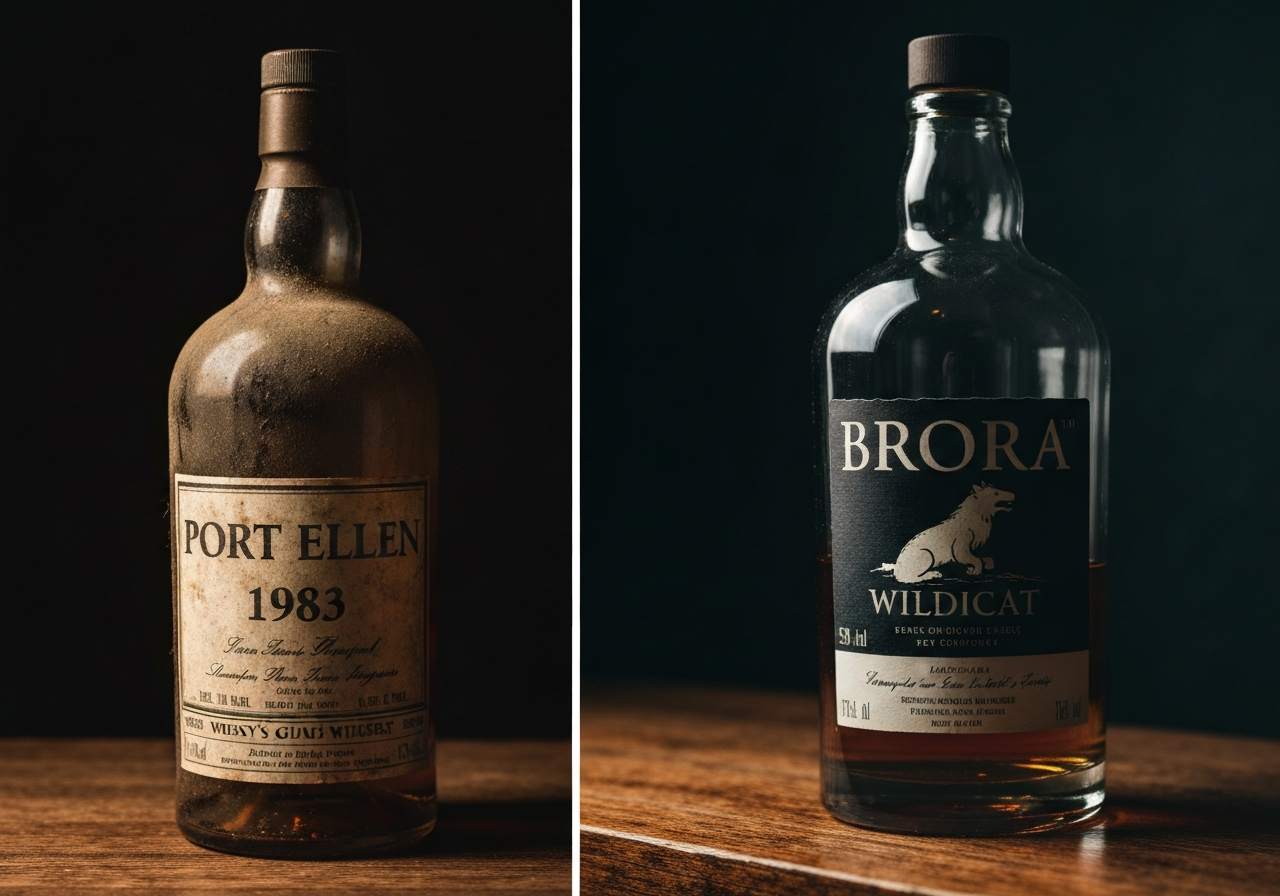
The most significant event for modern collectors was the "Whisky Loch" of the early 1980s. Following a period of unchecked optimism in the 70s, the industry found itself with a massive surplus of maturing spirit just as global demand plummeted. The result was a brutal culling. In 1983 alone, giants like the Port Ellen distillery and Brora were shuttered. At the time, Port Ellen was considered more valuable for its industrial maltings than its single malt. These sites weren't closed because the whisky was bad; they were closed because they were small, inefficient, or simply didn't fit into the corporate blending portfolios of the time.
But the 1980s wasn't the first time the industry faced a clearing of the decks. The "Pattison Crash" of 1898 is a cautionary tale of Victorian-era excess and fraud. The Pattison brothers built an empire on borrowed money and aggressive marketing (including training parrots to shout "Buy Pattisons Whisky!"). When their house of cards collapsed, it took dozens of distilleries down with it, permanently altering the Scotch landscape. This was followed by the era of corporate consolidation, led by the Distillers Company Limited (DCL), which saw smaller, character-rich distilleries sacrificed to create consistent, streamlined components for massive blends.
External factors have played their part too. In the United States, Prohibition was the ultimate ghost-maker, wiping out hundreds of historical gems like the original Old Taylor. In Ireland, a combination of trade wars with Britain and a refusal to move away from traditional pot still production led to a collapse that left only a handful of distilleries standing by the mid-20th century. The statistics are sobering: of the hundreds of distilleries operating in Scotland during the late 19th-century boom, less than half survived into the 21st century. Every survivor is a miracle, and every ghost is a reminder of what was lost to time and economics.
The Peated Phantoms: Port Ellen and Brora
If there is a Mount Rushmore of ghost distilleries, Port Ellen and Brora are the first two faces carved into the stone. Both closed in the fateful year of 1983, and both have since ascended to a level of cult status that borders on the religious. For many rare scotch collectors, a bottle of Port Ellen is the ultimate "holy grail."
Port Ellen, located on the south coast of Islay, was never intended to be a superstar. For most of its life, it was a workhorse distillery providing smoky malt for blends. However, as the stocks aged in the decades following its closure, something incredible happened. The spirit evolved into a profile that many enthusiasts call "industrial-maritime." It isn't just smoke; it’s a specific, oily, soot-heavy smoke, balanced by zesty lemon peel and a bracing sea-salt finish. Modern Islay whiskies are fantastic, but they rarely replicate that specific, heavy "old-school" peat that Port Ellen mastered. It’s a flavor of a bygone era of Islay production.
Across the country in the Northern Highlands, Brora tells a different story. Originally known as the "old" Clynelish, it was renamed Brora when a new, larger Clynelish distillery was built next door. Between 1969 and 1973, Brora was tasked with producing a heavily-peated malt to cover a shortage of Islay spirit caused by a drought. This "experimental" period created a legend. Brora is famous for its "waxy" mouthfeel—often described as "beeswax" or "lanolin"—combined with a "farmy" or "funky" peat. It’s often called the "wildcat" whisky, named after the cat on the Clynelish crest. These 30-year-old expressions have become auction darlings, frequently fetching thousands of dollars per bottle.
The story of these two phantoms has a new chapter, however. Recognizing the immense value of these brands, Diageo has embarked on the Brora resurrection and the rebuilding of Port Ellen. These aren't just cosmetic renovations; they are massive engineering projects using original blueprints and archaeological remnants to recreate the lost spirit. While the new spirit will undoubtedly be excellent, the question remains: can you ever truly recreate the soul of a ghost? Only time, and a few decades in a cask, will tell.
Elegance Interrupted: The Lowland Legends of Rosebank and Littlemill
While the smoky monsters of the Highlands and Islay grab the headlines, the Lowland region houses some of the most tragic losses in the industry. Chief among them is the Rosebank Lowland malt. Once hailed as the "King of the Lowlands," Rosebank represented the pinnacle of a delicate, floral style that has become increasingly rare.
Rosebank was unique because it utilized a rare combination of triple distillation (for lightness and purity) and traditional worm tub condensers (which add a certain weight and texture). This created a spirit that was incredibly floral and citrusy, yet possessed a creamy, substantial mouthfeel. Its closure in 1993 was a blow to the industry. It wasn't closed due to poor sales, but rather the logistical nightmare of its location on the Forth and Clyde Canal. Upgrading its effluent treatment to modern standards was deemed too expensive at the time, and so, a legend was silenced. For decades, the remaining stocks of Rosebank have been prized for their "elegant complexity," a style that modern boutique distilleries are only now trying to revive.
Then there is the mystery of Littlemill. Often cited as Scotland’s oldest distillery, with roots dating back to 1772, Littlemill’s story ended in flames. After being closed in 1994, the distillery was destroyed by fire in 2004, leaving only a handful of precious casks in the hands of the Loch Lomond Group. Littlemill was often underappreciated during its operational life, but modern enthusiasts have discovered a "hidden gem" profile in those final casks: a surprising burst of tropical fruits—pineapple and lime—mingled with a soft "marshmallow" sweetness. Because the distillery is physically gone, every bottle of Littlemill opened brings us one step closer to the total disappearance of this historic profile.
These Lowland ghosts remind us that whisky isn't always about the boldest flavors. Sometimes, the most profound losses are the ones that whisper rather than scream. The elegance of Rosebank and the fruity charm of Littlemill are reminders of a diverse Lowland landscape that we are only now beginning to see rebuilt.
Japanese Shadows: The Legend of Karuizawa
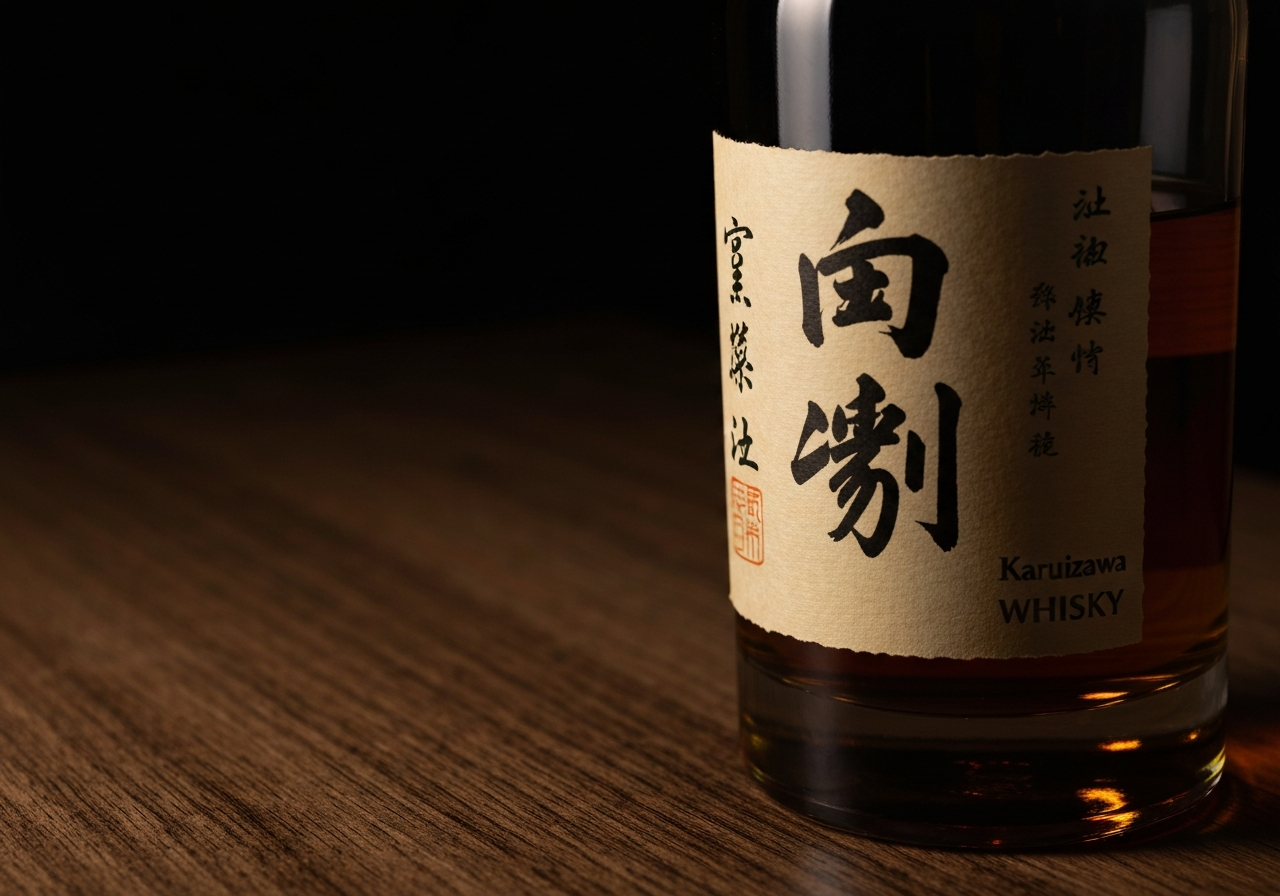
If you want to see the most extreme example of the ghost distillery phenomenon, you have to look toward Japan. While names like Yamazaki and Hibiki are global icons, Karuizawa whisky is the stuff of myth. Located at the foot of the active volcano Mount Asama, the Karuizawa distillery was small, traditional, and destined for greatness—though it didn't know it at the time.
Karuizawa closed its doors in 2001 and was completely dismantled, its equipment sold or scrapped. For a decade, it was a forgotten relic. However, the distillery had a very specific way of doing things that turned out to be a recipe for legendary status. They used small stills, traditional Golden Promise barley (the same stuff Macallan used in its heyday), and exclusively matured their spirit in heavy sherry casks. The result was a rich, umami-heavy spirit that was dark, intense, and wildly different from the clean, floral style popularized by Suntory. It was "old school" Scotch-style whisky made with Japanese precision.
The legend was solidified when a group called the "Number One Drinks Company" purchased the remaining 364 casks of Karuizawa stock. Instead of blending it away, they began a series of single-cask releases with stunning label art that captured the imagination of the global market. The scarcity, combined with the extreme quality, sent prices into the stratosphere. Bottlings like the Karuizawa 1960 "The Dragon" have sold at auction for over $300,000. It has become the most expensive, sought-after ghost whisky in the world.
Karuizawa’s legacy is a testament to the fact that greatness isn't always recognized in its own time. When the distillery was running, it struggled to find an audience. Today, it is a shadow that looms over the entire Japanese whisky industry, reminding us that sometimes, the most bold and uncompromising spirits are the ones that end up becoming immortal.
American Relics: Stitzel-Weller and the Pappy Legacy
The concept of the ghost distillery isn't limited to the glens of Scotland or the mountains of Japan. In the heart of Kentucky, the Stitzel-Weller history represents the most famous "ghost" in the world of Bourbon. Opened on Derby Day in 1935 by the legendary Julian "Pappy" Van Winkle, Stitzel-Weller was the birthplace of a style that would eventually change the American whiskey landscape forever.
What made Stitzel-Weller special was its "wheated" bourbon recipe. While most bourbons use rye as a secondary grain to provide spice, Pappy Van Winkle used wheat. This resulted in a softer, sweeter, and more approachable profile that aged exceptionally well. For decades, Stitzel-Weller produced brands like Old Fitzgerald and Cabin Still, which were staples of the mid-century American bar. However, as the "Brown Spirits Slump" hit in the late 20th century, the distillery eventually ceased its own distilling operations in 1992.
This is where the ghost story begins. The remaining stock at Stitzel-Weller was managed by Pappy’s descendants and became the backbone of the "Pappy Van Winkle Family Reserve" line. As word spread about the incredible quality of this "honey-barrel" wheated bourbon, a frenzy began. The "Pappy hype" we see today is rooted in the fact that for a long time, the whiskey in those bottles was ghost stock from a dead distillery. It was a finite resource that had been aged to perfection in the historic Shively rickhouses.
Today, the Stitzel-Weller site has been reborn as the "Bulleit Frontier Whiskey Experience." While they are aging whiskey there again, the original stills are gone. Visitors can still walk through the rickhouses and smell the "Angel’s Share" of the remaining ghost stocks, but the original Stitzel-Weller spirit is a relic of a golden age. It paved the way for the modern premium bourbon boom, proving that American whiskey could stand shoulder-to-shoulder with the finest cognacs and scotches in the world.
The Ghost in the Blend: Preserving Lost Spirits in Modern Vattings
While the most dedicated collectors hunt for single malt bottlings of ghost whiskies, a large portion of these lost spirits actually lives on in high-end blends. Major blending houses have long used their remaining ghost stocks to add what we call "historical weight" or "depth" to their most prestigious releases. The most famous example of this is the Johnnie Walker "Ghost and Rare" series.
In these releases, master blenders take small amounts of spirit from silent distilleries like Pittivaich, Cambus, or Glenury Royal and blend them with rare grains and malts. These ghost whiskies provide flavors that modern, high-efficiency distilleries simply cannot produce. For instance, a touch of grain whisky from a closed distillery like Cambus can add a velvety, butterscotch creaminess that only decades of quiet maturation can provide. It’s a way of letting the public experience a "ghost" without the $5,000 price tag of a single malt bottling.
We also have to tip our hats to the Independent Bottlers—companies like Gordon & MacPhail, Signatory Vintage, and Hunter Laing. They are the true "guardians of the ghosts." Decades ago, these companies had the foresight to buy casks from distilleries that were either unloved or slated for closure. They tucked them away in their own warehouses, allowing them to age for 40, 50, or even 60 years. Without these independent "keepers of the flame," spirits from distilleries like Convalmore or Glen Mohr would have likely been lost to generic blends long ago. Now, they are essential components of any connoisseur's collection.
There is, of course, a debate in the whisky community: Is it better to bottle a ghost as a pure single malt, or use it to elevate a blend? While the purist will always want the unadulterated spirit, there is something poetic about a blend that carries the DNA of a dozen different lost eras. It’s a liquid mosaic of history.
The Science of Scarcity: Investing in the Dead
It’s impossible to talk about ghost distilleries without touching on the world of whisky investment. In the last decade, rare whisky has moved from a niche hobby to a legitimate asset class. According to the Knight Frank Luxury Investment Index, rare whisky has frequently outperformed gold, fine wine, and even classic cars over 10-year periods. The primary driver of this growth? You guessed it: the ghosts.
The economic principle here is "Terminal Depletion." Every time a bottle of 1970s Port Ellen is opened, the total world supply decreases forever. Unlike a modern Macallan or Glenfiddich, where the distillery can (theoretically) produce more, ghost whiskies have a hard ceiling. This makes them exceptionally resilient to market fluctuations. If you own one of the last remaining bottles of a lost distillery, you own a piece of a shrinking pie. However, this market isn't without its risks. The rise of sophisticated counterfeits is a real threat, and collectors must be increasingly vigilant about provenance and bottle seals.
There is also the "wood factor." Just because a whisky is from a ghost distillery doesn't mean it’s delicious. Some casks have sat in the wood for too long—40 or 50 years—and have become "over-oaked," tasting more like a pencil shavings than a spirit. A true discovery, like the forgotten casks of 60-year-old Macallan or a lost parcel of dunnage-aged Brora, is a rarity. For the average enthusiast, the advice is simple: distinguish between "drinking value" and "collectible value." If you’re buying to drink, look for the "lesser" ghosts—the ones that weren't famous, but were made with care. If you’re buying to invest, you’re chasing the legends.
"Whisky is a liquid history lesson. To drink a ghost is to commune with the past, but to invest in a ghost is to bet on the future of human nostalgia."
Resurrection: Can You Ever Truly Bring a Ghost Back?
We are currently living in the era of the "Resurrection Distillery." Driven by the astronomical prices of ghost whiskies, companies are pouring millions into reviving dormant names. We see this with Rosebank Lowland malt being rebuilt by Ian Macleod Distillers, and the aforementioned Port Ellen and Brora projects. Even Dallas Dhu, long a museum, has seen talks of a return to production.
The technical challenges of this are immense. You can’t just turn the lights back on. You have to find the original water source (which may have changed or been diverted), commission copper stills that are exact replicas of the originals (down to every dent and curve), and try to find yeast strains that mimic what was used forty years ago. Some distillers even use "priming"—taking a small amount of original ghost stock and blending it into the new spirit to bridge the historical gap. It is a fascinating blend of science, history, and marketing.
The reaction from the "whisky geek" community is mixed. Purists argue that the new spirit is just a "zombie"—a brand using a famous dead name to sell a different product. But others point to the success of Bruichladdich. Effectively a "ghost" for years before its 2001 revival, Bruichladdich proved that you can save a distillery’s soul if you approach it with enough passion and respect for the terroir. These resurrected ghosts might not be identical to their ancestors, but they ensure that the name lives on for another generation to enjoy.
Conclusion: The Last Pour of a Fading Era
Ghost distilleries represent more than just high auction prices or rare flavor profiles; they are liquid snapshots of a specific cultural and economic moment in time. They represent the craftsmanship of a generation of distillers who worked long before "brand ambassadors" or "global marketing strategies" existed. Every bottle is a testament to the transience of all things—even the most legendary spirits eventually run dry.
If you have the chance to taste a ghost, whether at a specialist whisky bar or through an independent bottling, take it. Don’t just look at the bottle as an investment; look at it as a fading star. These are the flavors of a landscape that is slowly being reshaped. While the industry is currently in a "new wave" of growth, with exciting new distilleries popping up from Sweden to Australia, we must never forget the lessons of the ghosts. They teach us about the importance of character over efficiency, and the value of a spirit that isn't afraid to be unique.
So, the next time you're browsing the shelves of your favorite shop or looking through the DramNote app, keep an eye out for those silent names. They are the echoes of the industry's past, and they are well worth listening to. We’ll leave you with one final thought: the beauty of whisky lies in the fact that it is meant to be consumed. Even the rarest ghost is only truly alive when it’s in your glass.
What "ghost" would you want to taste if you had one final dram? Let us know in the comments below!