Whisky's 'Craft Boom': Is Small Batch Always Better?
Exploring the rise of micro-distilleries and what it means for your next pour.
The Global Distillation Explosion: A Decade of Growth
If you walked into a local liquor store fifteen years ago and asked for a "craft whisky," the clerk might have pointed you toward a dusty bottle of a lesser-known Scotch or perhaps a high-end Kentucky bourbon from a heritage distillery. Back then, the industry was a landscape of giants. But oh, how the tides have turned. We are currently living through a genuine craft whisky boom, a global distillation explosion that has fundamentally reshaped what we see on our bar shelves and in our Glencairn glasses.
To understand where we are, we have to look back at the 2008 economic shift. While the world was reeling from a financial crisis, a quiet revolution was beginning in the spirits world. Inspired by the success of the craft beer movement, entrepreneurs began to wonder if the same "local and artisanal" magic could be applied to brown spirits. Fast forward to today, and the numbers are staggering. According to the American Craft Spirits Association (ACSA), there are now over 2,200 craft distilleries in the United States alone. To put that in perspective, at the turn of the millennium, you could count them on your fingers and toes.
This surge wasn't just down to grit and passion; it was paved with legislative wins. The role of policy can't be understated—specifically the Craft Beverage Modernization and Tax Reform Act. By significantly lowering federal excise taxes for small producers, the government lowered the barrier to entry, allowing independent distilleries to reinvest that capital into better barrels, better grain, and more staff. This created a fertile ground where smaller players could actually survive the long "wait time" of whisky maturation.
Perhaps more importantly, consumer psychology shifted. We moved away from rigid brand loyalty toward a "discovery culture." Today’s drinker isn't just looking for a consistent pour; they are looking for a story, for local provenance, and for a connection to the person behind the still. While craft spirits currently hold about 5-7% of the U.S. market by volume, they represent nearly 13% by value. This tells us one thing clearly: drinkers are willing to pay a premium for artisan spirits with a soul. And it’s not just an American story. From the award-winning M&H (Milk & Honey) in Israel to the tropical aging wonders of Taiwan’s Kavalan and the burgeoning English whisky movement, the world is becoming a very small, very delicious place for whisky lovers.

Defining the Indefinable: What is 'Craft' Anyway?
Here is where things get a little murky. If you ask ten different people to define small batch whisky, you’ll likely get twelve different answers. Unlike the beer world, where the Brewers Association has a very specific set of rules to qualify as "craft," the whisky industry lacks a universal, legal definition. This has led to a fair amount of marketing ambiguity and, frankly, some consumer confusion. When a massive heritage brand releases a "small batch" expression, they might be blending 100 to 1,000 barrels. For a tiny micro-distillery in Vermont or Texas, a "large" batch might be just five barrels. The scale is completely different, yet the label says the same thing.
The ACSA tries to bring some order to this chaos with three main criteria: independent ownership (meaning no more than 25% is owned by a large beverage alcohol firm), transparency in production, and a maximum sales limit (typically under 750,000 proof gallons). It’s a good benchmark, but it doesn’t always capture the nuances of how the spirit is actually made. This leads us to the great "Grain-to-Glass" versus "Sourced" debate. In a grain-to-glass model, the distillery handles everything: they buy the raw grain (often from local farmers), mash it, ferment it, distill it, and age it. It is an arduous, expensive process that represents the pinnacle of the craft philosophy.
On the other hand, many "craft" labels are actually applied to sourced whisky. These brands buy aged or unaged spirit from massive industrial producers like MGP in Indiana, then bottle it—sometimes after further aging or finishing—under their own name. While there is nothing inherently wrong with this, the TTB (Alcohol and Tobacco Tax and Trade Bureau) labeling requirements can be tricky. A label that says "Bottled by" or "Produced by" is a legal loophole that often masks the fact that the liquid wasn't "Distilled by" the name on the front. As consumers, we have to be detectives, looking past the rustic fonts and burlap sacks to see who actually ran the still. Understanding these micro-distillery trends is the first step toward becoming a more informed enthusiast.
The Agility of the Underdog: Innovation at Scale
If the big guys are the luxury cruise ships of the whisky world—stable, reliable, and slow to turn—then craft distilleries are the nimble speedboats. They are the research and development labs for the entire industry. Because they don’t have to answer to shareholders demanding millions of cases of identical liquid, they can afford to take massive risks. This agility has led to some of the most exciting developments in modern spirits, particularly with heirloom grains. While the industrial giants rely on high-yield commodity corn and barley, craft distillers are resurrecting forgotten varieties like Jimmy Red corn or rare heritage barley. These grains are harder to work with and produce less alcohol per ton, but the flavor profiles they offer are revelatory.
We’re also seeing a revolution in whisky maturation techniques. Traditionalists in Scotland or Kentucky might scoff at the use of small-format barrels (5 to 15 gallons), but for a startup, these are essential tools. The increased surface-area-to-liquid ratio accelerates the interaction with the wood, allowing a younger spirit to punch above its weight class. Beyond just size, craft distillers are experimenting with non-traditional wood types—think mesquite-smoked malts or finishes in local fruit-wood casks—that would be impossible to scale for a global brand.
"The craft distiller isn't trying to make a product that everyone likes; they are trying to make a product that some people love passionately."
Take a look at a case study like Westland Distillery in Seattle or Ironroot Republic in Texas. Westland has become a flag-bearer for the American Single Malt category by utilizing the cool, damp climate of the Pacific Northwest to create a profile that is distinctly "not Scotch." Meanwhile, Ironroot uses the brutal heat and humidity of North Texas to "cook" their barrels, creating a concentrated, dark, and oily profile that would take twenty years to achieve in a cooler climate. In these houses, the Master Distiller functions more like an artist than a technician. They lean into wild fermentations, extended mash times, and non-chill filtering to preserve the fatty acids and esters that give a whisky its "chewiness." It was these micro-distillers who kept forgotten styles like Pennsylvania Rye or Empire Rye alive when they were nearly extinct, eventually forcing the big heritage houses to pay attention and release their own versions.
![A close-up of a whisky label focusing on the fine print 'Distilled in Indiana' vs 'Bottled in [Local City]' to illustrate the sourcing debate.](https://storage.googleapis.com/dramnote-dec62.firebasestorage.app/blog_images/whiskys-craft-boom-is-small-batch-always-better/image_2.png)
The Consistency Conundrum: The Risks of the Micro-Batch
Now, let’s get real for a second. While the "story" of craft is beautiful, the liquid in the bottle isn't always a home run. One of the biggest hurdles for any small operation is the "consistency conundrum." If you buy a bottle of a major label bourbon today and another one next year, they will taste identical. That is a feat of incredible engineering. A micro-distillery, however, often lacks the massive inventory needed to blend for consistency. This leads to significant batch variation. That bottle you loved last month? The next batch might have a totally different profile because the weather was colder during fermentation or the barrels came from a different part of the forest. For some, this is part of the charm; for others, it’s a frustration.
Then there is the "Green Wood" problem. To get product to market quickly, many small shops use those 5-gallon barrels I mentioned earlier. If not handled with extreme care, the wood can overwhelm the spirit. This results in a "wood-dominant" profile that tastes more like a hardware store or a sawdust pile than a balanced whisky. The distillate hasn't had the time to breathe and mellow, leading to harsh, tannic notes that mask the beautiful grain work. Technical limitations also play a role. Smaller stills and less sophisticated laboratory equipment can result in wider "cuts" of the heads and tails during distillation. This means unwanted congeners—the stuff that causes that "craft funk" or a particularly nasty hangover—can sometimes end up in the final bottle.
Financial pressure is the silent enemy of quality. It costs a fortune to run a distillery, and many owners are forced to release "young whisky" (sometimes only 2 years old) just to maintain cash flow. While some young whiskies are great, many are simply immature—tasting grainy, metallic, or overly hot. Finally, there’s the irony of transparency. Some brands wrap themselves in the "craft" flag, charging a "locally handmade" premium, while secretly bottling mass-produced juice from MGP or Canadian plants without disclosing it. It creates a "buyer beware" environment where the price tag doesn't always match the production effort.
The Industrial Masterpiece: Why Big Whisky Still Wins
It’s easy to root for the underdog, but we shouldn't dismiss the "Big Whisky" players. There is a reason brands like Buffalo Trace, Macallan, and Wild Turkey have stayed at the top for generations. Their greatest advantage is what I call the "Library of Barrels." When you have 10,000 barrels of aging spirit to choose from, you can select the top 1% to create a truly transcendent premium expression. A small distiller with only 50 barrels simply doesn't have that luxury; they have to use what they have, even if a few of those barrels are just "okay."
There is also the matter of generational expertise. When you drink a bottle from the Noe family (Jim Beam) or the Russell family (Wild Turkey), you are tasting a sensory memory that spans decades. These Master Blenders have a technical knowledge of how spirit behaves over twenty years that a new craft distiller simply hasn't lived long enough to acquire yet. Furthermore, economies of scale mean efficiency equals accessibility. Major distilleries can produce a high-quality, 10-year-old bourbon or Scotch and sell it for $35 to $50. A craft producer, due to their higher overhead and lower volume, would have to charge $100 for a spirit of similar age. For the average drinker, the value proposition of big whisky is hard to beat.
Let’s not forget the science of the warehouse. The giants use massive multi-story rack-houses where they manage micro-climates by rotating barrels through different floors to achieve specific profiles. This level of environmental control is nearly impossible for a small operation. Interestingly, even within these massive companies, there is "hidden craft." Many big brands have experimental warehouses and small-still projects—like Wild Turkey’s ‘Master’s Keep’ series—where they play with the same innovative techniques that the micro-distillers use, but with the backing of a multi-million dollar lab. Sometimes, the industrial masterpiece is exactly that—a masterpiece of precision.
The Sourced Whisky Debate: Integrity vs. Quality
Let’s talk about the elephant in the tasting room: sourced whisky vs craft. In the industry, these are known as Non-Distiller Producers (NDPs). These are brands that buy aged stock from someone else, blend it, and bottle it. For a long time, this was seen as a "dirty little secret," but the conversation is changing. Why? Because some of the best whiskies on the market are sourced. Early batches of High West and WhistlePig were sourced, and they were—and are—phenomenal. The "MGP Factor" (referring to the massive plant in Lawrenceburg, Indiana) is a testament to quality; they make some of the best rye and bourbon in the world. Buying their spirit isn't a failure of craft; it's a choice of supply.
The real issue isn't the sourcing itself; it’s the ethics of transparency. We saw a major consumer backlash years ago against brands like Templeton Rye, which faced lawsuits over misleading "local" claims. When a brand implies a "prohibition-era family recipe" made in a small Iowa town, but the juice is actually coming from an industrial plant in Indiana, consumers feel cheated. However, if a brand is honest—stating that they searched the country for the best barrels and used their expertise to blend them—suddenly it becomes a valid form of artisan spirits production.
Blending is a craft in its own right. Selecting barrels, deciding on the proof, and utilizing secondary finishes (like Sherry, Port, or Mizunara oak) requires a world-class palate. Sourcing also acts as a vital "bridge" for new distilleries. It allows them to generate revenue and build a brand while their own spirit sits in the warehouse for four, six, or eight years. As a consumer, the trick is to check the back label. If it says "Distilled in Indiana" or "Distilled in Kentucky" but the brand is based in New York, you know it’s sourced. That doesn't mean it’s bad—it just means you’re paying for the blender’s art, not the distiller’s.
Terroir and Community: The Real Value of the Micro-Distillery
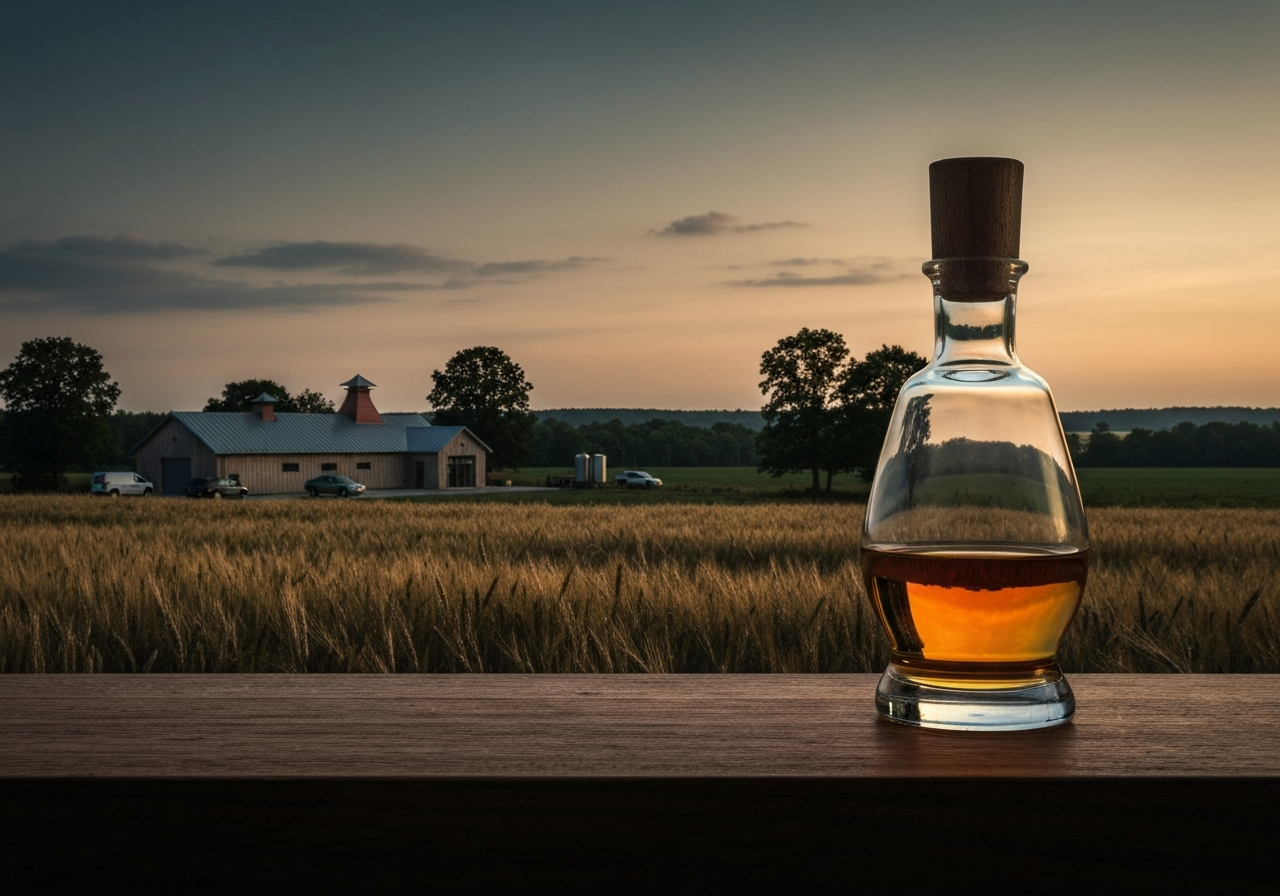
Beyond what is in the glass, the craft whisky boom has brought something back to the industry that was lost during the era of consolidation: a sense of place. This is often called "terroir," a term borrowed from the wine world. It’s the idea that a whisky is a product of its environment. Micro-distilleries are leading a resurgence of the "Local Grain Economy." By partnering with local farmers to grow specific, non-commodity grains, these distilleries provide much higher margins for the farmers than the industrial markets ever could. They are helping to preserve agricultural diversity and keeping family farms alive.
This sense of place extends to the water sources, the local wild yeasts, and even the regional air. A whisky aged in a coastal warehouse in Maine will breathe in the salt air, developing a "DNA" that is fundamentally different from a spirit aged in the dry heat of an Arizona desert. This regionality is something that can't be replicated in a massive, climate-controlled industrial facility. It makes every visit to a new distillery a unique experience.
Moreover, the micro-distillery has become a vital community hub. In many rural areas, a new distillery creates jobs, draws in "whisky tourism," and often leads to the preservation of historical buildings that would otherwise be torn down. Many of these small players are also leading the charge in sustainability. Because they are part of the community, they care about their footprint. We see circular economies where spent grain is given to local cattle as feed, and innovative solar-powered stills are becoming more common. When you visit a craft distillery, there is a human connection. Often, the person pouring your glass is the same person who was running the still or hauling grain bags that morning. That connection is something no marketing budget can buy.
A Consumer’s Guide: How to Spot a 'True' Craft Gem
So, how do you navigate this crowded market without getting burned? It all starts with label literacy. You have to be a bit of a skeptic. When you pick up a bottle, look for the magic phrase: "Distilled by [Brand Name]." If it says "Bottled by" or "Produced by," the liquid likely came from somewhere else. Again, that’s not always bad, but it should change how you value the price point. If you’re paying $90 for a 3-year-old sourced bourbon, you might want to ask yourself if the blending or finishing is truly worth that premium.
Next, do an "age statement" reality check. In the craft world, a 3-year-old whisky might be genuinely fantastic if it was made with heirloom grains and aged in a specific climate. However, you have to evaluate if the flavor justifies the price. Don't just pay for the "craft" label; pay for the liquid quality. A good rule of thumb is the "Transparency Checklist." Check the distillery’s website. Do they list the mash bill (the percentage of grains used)? Do they mention the barrel size, the yeast strain, or the specific farm where the grain was grown? The more information a distillery shares, the more likely they are to be proud of their process and producing something of high quality.
- Look for State-Specific Designations: Some regions have created quality seals, like "Empire Rye" in New York or "Texas Certified," which guarantee the whisky was made from local grain and distilled entirely within that state.
- Check the Proof: Many craft distillers bottle at "bottled-in-bond" (100 proof) or higher. This often indicates they aren't trying to hide flaws by watering the spirit down to the minimum 80 proof.
- The "Try Before You Buy" Rule: This is the most important tip. With so much variation in the craft world, festivals, local distillery visits, and bar pours are essential. Don't drop $80 on a bottle because the label looks cool. Taste it first!
The Future of Craft: Mergers, Acquisitions, and Evolution
As we look toward the future, the craft landscape is entering a new phase of evolution. We are seeing a major "Big Buy-Out" trend. Giants like Constellation Brands and Pernod Ricard are snapping up craft icons like High West, Rabbit Hole, and Castle & Key. While some enthusiasts fear this will "ruin" the brand, it often results in a "Craft-Industrial" hybrid. The acquired brand gets access to big-company capital—allowing them to build better warehouses and labs—while keeping the creative spirit that made them successful in the first place. It’s a way for craft brands to finally reach the scale they need to compete on price.
We’re also seeing the rise of "Alternative Spirits." Craft distilleries are moving beyond just trying to mimic bourbon and Scotch. The American Single Malt category is on the verge of becoming a legally recognized designation, and it is almost entirely driven by the craft movement. We’re also seeing agave-influenced whiskies and heavily smoked spirits that push the boundaries of what "whisky" can even be. The creativity isn't slowing down; it’s just getting more refined.
Will the market sustain $100+ craft bottles forever? Likely not. We are probably headed for a market correction where only the distilleries producing truly exceptional liquid will survive the "Premiumization" trend. But for us, the drinkers, this is a win. It means the "marketing-first" brands will fade away, leaving behind a landscape of independent distilleries that prioritize transparency and flavor. The final verdict? "Small Batch" is a style and a scale, not a guarantee of quality. The best pour is the one that tells a true story—the one where you can taste the grain, the wood, and the passion of the person who made it. Cheers to your next discovery!