Whiskey's Silent Influence: Decoding Water's Role
Discover how the humble water source profoundly shapes the character of your favorite spirits.
The Lifeblood of the Spirit: An Introduction to Uisge Beatha
Whenever we gather around a table to share a dram, the conversation almost inevitably steers toward the romance of the ingredients. We talk about the specific strain of heirloom barley, the charred "alligator" skin of a virgin oak cask, or the decades of patience required for the liquid to mature. Yet, there is a silent partner in every glass—one that is often overlooked despite being the most prevalent component of the spirit. I’m talking, of course, about water.
Historically, the relationship between whiskey and water is so intimate that they share a name. The word "whiskey" is actually an anglicized version of the Gaelic phrase water of life uisge beatha. For the early distillers in Scotland and Ireland, water wasn't just an ingredient; it was the fundamental soul of the spirit. It was the medium through which the "spirit" of the grain was captured and preserved. When we hold a glass of whiskey today, we are holding a liquid that is anywhere from 60% to 90% water, depending on whether you are sipping a high-octane cask strength release or a standard 80-proof bottling. It is the canvas upon which every other flavor is painted.
The scale of water’s involvement in the whiskey distillation process is truly staggering. While you might only see a few hundred milliliters in your bottle, it takes an enormous amount of "invisible" water to get it there. To produce a single liter of finished whiskey, a distillery might cycle through 40 to 50 liters of water. This water is used for mashing the grains, cooling the copper stills, and even the intensive cleaning processes that keep the distillery running. In many ways, a distillery is a massive water-processing plant that happens to produce a delicious alcoholic byproduct.
For too long, we’ve treated water as a mere solvent. But as any master distiller will tell you, the water source is a silent partner that dictates the mouthfeel, clarity, and the ultimate extraction of aromatic compounds. Whether it is during the mashing phase where sugars are born, the cooling phase where vapors return to liquid, or the final proofing where the spirit is "cut" to strength, water is the primary architect of character. Let’s dive deep into why your favorite dram tastes the way it does, starting with the chemistry of the source.
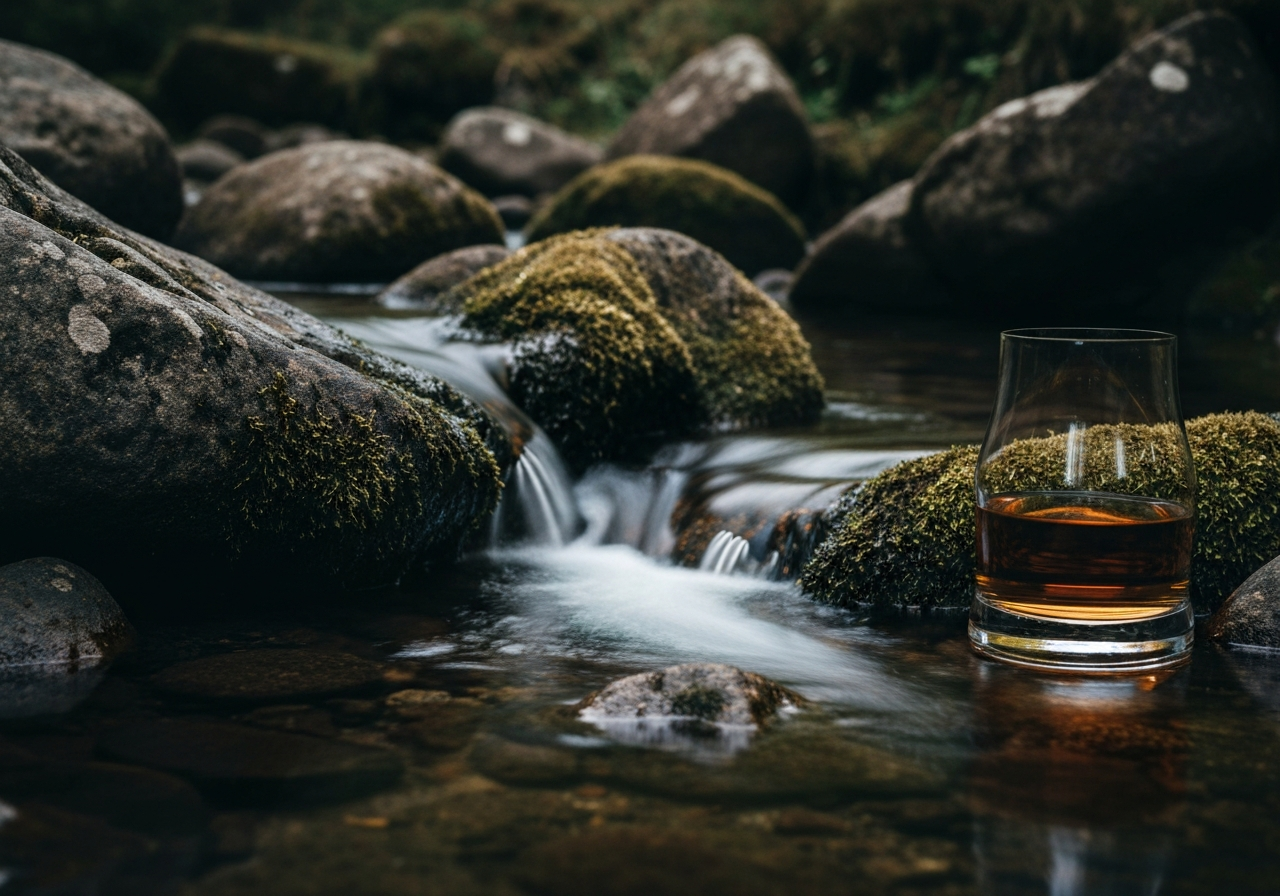
The Chemistry of the Mash: Minerals as Catalysts
The journey of whiskey begins in the mash tun, where crushed grain meets hot water. This is where the mineral content in whiskey first makes its mark. We often think of mashing as a simple steeping process, like making tea, but it is actually a complex biochemical reaction. Water serves as the medium for enzymes—specifically alpha-amylase and beta-amylase—to go to work, breaking down complex grain starches into the fermentable sugars that yeast can actually eat.
The minerals in the water act as the "pit crew" for this process. Calcium, for instance, is the superstar of the mash tun. It lowers the pH of the mash to the ideal range for enzymes to thrive, helps to stabilize those enzymes, and eventually assists in the flocculation of yeast (the process where yeast clumps together and settles) once fermentation is over. Magnesium is another heavy hitter, serving as an essential nutrient for yeast health. Without the right balance of these minerals, the yeast becomes stressed. A stressed yeast is a grumpy yeast, and grumpy yeast produces "off-flavors"—the kind of sulfurous, rubbery, or overly-aggressive esters that can ruin a spirit before it ever touches a barrel.
Then, there is the question of alkalinity. Water pH acts as a buffer; if the water is too alkaline or too acidic, it can throw the entire fermentation out of whack. However, the most famous "villain" in the world of whiskey water is iron. Iron is the absolute enemy of the distiller. If even trace amounts of iron find their way into the spirit, they react with the tannins in the wood during aging, turning the whiskey a muddy, unappealing black color and imparting a metallic, bitter taste. This is why distilleries have historically been built near natural water sources that have been filtered through rocks that naturally strip away iron.
We also can’t forget about the "hard" versus "soft" water debate. In the world of whiskey, "hard" water is mineral-dense, while "soft" water is relatively pure. Generally speaking, hard water tends to yield a more robust, complex, and sometimes "chewy" spirit, whereas soft water often results in a cleaner, lighter, and more delicate "new make" spirit. Neither is objectively better, but they set the foundational texture of the spirit that the wood will eventually build upon.
Geologic Terroir: From Limestone Shelves to Peat Bogs
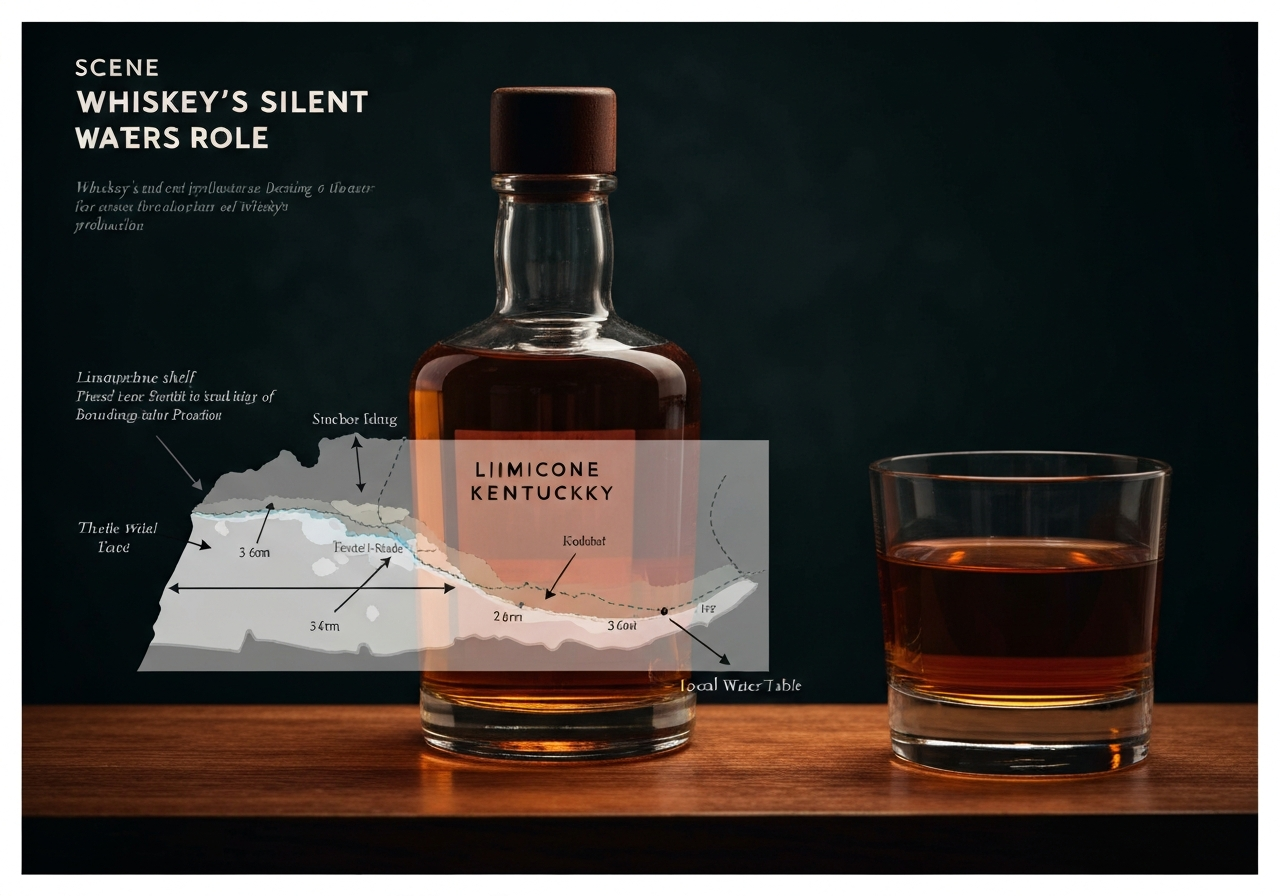
When we talk about "terroir," we usually think of wine, but whiskey has a profound geologic terroir of its own, driven entirely by the whiskey water source. The most legendary example of this is the limestone water bourbon connection in Kentucky. Much of the Bluegrass State sits atop a massive prehistoric limestone shelf. This limestone acts as a giant natural filter, removing iron from the water while simultaneously enriching it with calcium and magnesium. This creates a "sweet" water profile that is perfect for the corn-heavy mashes used in bourbon. It’s no coincidence that the world’s most famous bourbon distilleries are clustered around these geologic formations.
Across the Atlantic in Scotland, the story changes with the landscape. In the Scottish Highlands, many distilleries draw water that has flowed over ancient granite. This water is incredibly soft and pure, contributing to the elegant and fruity profiles often associated with the region. However, if you travel to the island of Islay, the water tells a darker story. At distilleries like Laphroaig, the water source—such as the Kilbride Stream—passes through thick layers of peat bogs before reaching the distillery. This water is often stained a tea-like brown and carries organic peaty matter directly into the mash, contributing to that iconic smoky, medicinal profile long before the malt is even dried over a peat fire.
There is, of course, a certain amount of "spring water" marketing in the industry. You’ll see plenty of labels boasting about a "private mountain spring," but the truth is a bit more nuanced. While some distilleries do rely on a pristine, ancient source, others use municipal water that has been treated via Reverse Osmosis (RO) to create a blank canvas. Both approaches have their merits. Using a natural source preserves a unique local character, while RO water allows for absolute consistency.
A fascinating case study is Glenmorangie’s Tarlogie Springs. Despite being in the Highlands—a region typically known for soft water—Glenmorangie’s source is unusually hard and mineral-rich. They credit this "hard" water for the floral, elegant, and complex profile of their spirit. Even with the tallest stills in Scotland, which are designed to produce a light spirit, the minerals in the water provide a structural backbone that prevents the whiskey from becoming too thin. Similarly, in Japan, the exceptionally soft water of the Japanese Alps—used by Suntory's Hakushu distillery—is credited with the "silky" and "ethereal" mouthfeel that has made Japanese malts a global sensation.
The Cooling Conundrum: Temperature and Copper Contact
Most enthusiasts focus on the water that goes *into* the whiskey, but the water that stays *outside* the whiskey is just as important. During the distillation process, the alcohol vapors must be cooled to turn them back into liquid. This happens in the condenser, and the temperature of the cooling water is a major lever for the distiller.
The colder the cooling water, the faster the vapors condense. If the vapors condense quickly, they have less time to interact with the copper of the still. Copper is a reactive metal that "cleans" the spirit by stripping away heavy sulfur compounds. Traditional "worm tubs"—which are essentially large wooden vats of cold water with a coiled copper pipe inside—often use less water or let it sit a bit warmer to create a "heavy," meaty, and sometimes sulfurous spirit. Distilleries like Mortlach are famous for this "beastly" character, which is a direct result of how they manage their cooling water.
This creates a fascinating seasonal variation. In the middle of a Scottish winter, the river water used for cooling can be near freezing. In the height of summer, that same river might be significantly warmer. This temperature difference changes how much "reflux" occurs inside the still. Warmer cooling water leads to less reflux, resulting in an oily, heavy spirit. Some traditionalists argue that a distillery’s spirit actually tastes different depending on which season it was distilled in, all because of the fluctuating temperature of the local river.
In the modern era, sustainability has entered the cooling conversation. Cooling a distillery requires an immense amount of energy and water. Forward-thinking distilleries are now finding ways to recycle this thermal energy. For example, the warm water coming out of the condensers at Bowmore was famously used to heat the local community swimming pool. Other distilleries use this "waste" heat to warm their offices or greenhouses. It’s a beautiful full-circle moment where the water used to make whiskey helps sustain the community that makes it.
The Art of Proofing: Why Water 'Opens' the Dram
Eventually, the whiskey leaves the barrel. At this stage, it is often "cask strength," which can be anywhere from 55% to 65% ABV or higher. To make this palatable and consistent for the mass market, the spirit is "cut" with water to proofed whiskey levels, usually 40% to 46% ABV. This isn't just about diluting the alcohol; it is a delicate balancing act. Distillers usually use demineralized or distilled water for this process to ensure that no "flocculation" occurs—this is when minerals in the water react with the oils in the whiskey to create a cloudy, unappealing sediment in the bottle.
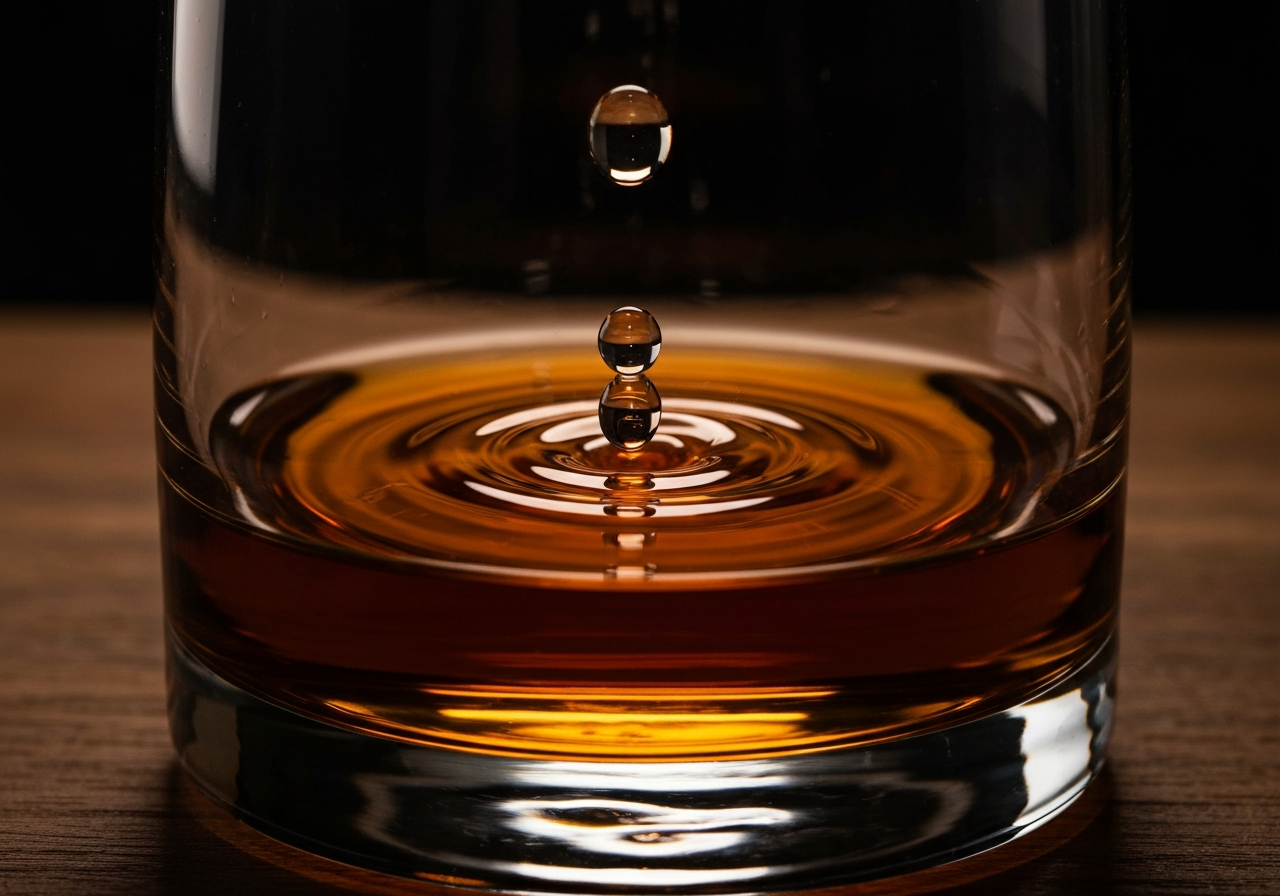
But why do we add water at all? There is a fascinating bit of organic chemistry at play here called the "Guaiacol Effect." Scientific studies have shown that adding a drop of water to whiskey changes the molecular structure of the liquid. Molecules like guaiacol—which are responsible for those lovely smoky, peaty, and spicy aromas—are hydrophobic, meaning they don't like water. When you add water, these molecules are pushed away from the bulk of the liquid and forced to the surface, where they can easily evaporate and reach your nose. This is why a drop of water can suddenly "unlock" a whiskey that seemed closed-off or muted.
This interaction also creates the "Marangoni Effect," which explains the "legs" or "tears" you see on the side of your glass. The surface tension of the water and the evaporation of the alcohol create a physical tension that pulls the liquid up the glass. By watching how these legs form, an experienced taster can get a sense of the spirit's density and alcohol content. Diluting whiskey with water is essentially a way of rearranging the furniture of the spirit to give the aromas more room to breathe.
For the distillery, proofing is the final opportunity to ensure quality. While "distilled water" is the industry standard to avoid altering the carefully crafted flavor profile, some boutique distillers will use the original source water to proof their whiskey, believing it maintains the "terroir" of the spirit from start to finish. Whether you prefer your whiskey neat or with a splash, there is no denying that water is the key that unlocks the door to flavor.
Modern Science vs. Ancient Streams: The Evolution of Water Treatment
While the romantic image of a distiller hauling buckets from a crystal-clear stream still exists in our minds, the reality of modern whiskey production is much more high-tech. Today, many of the world's largest brands rely on Reverse Osmosis (RO) systems. This technology allows a distillery to strip water down to a "blank canvas," removing every single mineral and impurity. Once they have this pure H2O, they can actually "build back" a custom mineral profile by adding specific amounts of calcium, magnesium, or other salts.
Why go to all that trouble? One word: Consistency. If you are a global brand like Johnnie Walker or Jack Daniel’s, you need a bottle bought in London to taste exactly like a bottle bought in Tokyo. Because natural water sources can change depending on rainfall, season, or local construction, using a standardized, scientifically managed water profile is the only way to ensure that millions of bottles remain identical year after year.
There are also modern dangers to consider, particularly in municipal water. Chlorine and chloramine are commonly used to treat city water, but they are the natural enemies of whiskey. When these chemicals come into contact with the phenols in whiskey (especially peated whiskey), they can create "trichloroanisole" (TCA) or other compounds that impart medicinal, plastic, or "wet cardboard" off-notes. Modern distilleries must be incredibly vigilant, employing specialized water analysts whose entire job is to monitor the purity and chemical balance of the water every single hour of production.
De-ionizing water is another crucial step. By removing charged ions, distillers prevent long-term precipitation in the bottle. Have you ever seen a bottle of whiskey that has been sitting on a shelf for ten years develop little white flakes at the bottom? That is usually the result of ions in the water slowly bonding together and falling out of solution. Modern filtration ensures that your bottle stays as clear and bright as the day it was filled, no matter how long you keep it in your collection.
Environmental Stewardship: The Future of Whisky’s Water
We cannot talk about the whiskey water source without addressing the growing challenge of water scarcity. In recent years, even "rainy" Scotland has faced unprecedented droughts. In 2018 and again in 2022, several major distilleries were forced to temporarily shut down production because the burns and rivers they rely on had run too low. It was a wake-up call for an industry that has long taken its "lifeblood" for granted.
This has sparked a massive "Water Footprint" movement. Distilleries are now setting ambitious goals to reduce the amount of water used per liter of spirit by 30% to 50% by the year 2030. This involves massive investments in closed-loop cooling systems. Instead of drawing water from a river, using it once, and pumping it back out, new-world distilleries are using cooling towers that recycle 100% of their process water, essentially using the same water over and over again for years.
Waste water management is the other side of the coin. After distillation, what’s left in the still is a hot, acidic liquid known as "spent wash" or "pot ale." In the past, this was often dumped, but it can be devastating to local ecosystems, depleting oxygen in rivers and harming fish. Today, distilleries have become masters of waste management. This liquid is often processed into animal feed or run through anaerobic digesters to create biogas, which then powers the distillery.
Furthermore, "Source Protection" has become a priority. Many distilleries are now buying up the land surrounding their water sources—not to build on it, but to protect it. By controlling the surrounding hills and forests, they can prevent agricultural runoff, pesticides, and fertilizers from contaminating their precious aquifers. They are becoming the stewards of the land, realizing that if they lose their water, they lose their whiskey.
The Taster’s Guide: Choosing Your Water at Home
Now, let's bring this back to your glass. How should you, the enthusiast, handle water at home? The first and most important rule: **Avoid tap water.** Even if your tap water tastes fine to drink, the chlorine and fluoride used by municipalities can absolutely "kill" the delicate nose of a high-end single malt. If you’ve spent $100 on a bottle, don't let a few cents worth of tap water ruin the experience.
If you are diluting whiskey with water, you have a few options. Soft bottled waters like Volvic or Fiji are generally preferred because they are neutral and won't clash with the whiskey's existing mineral profile. However, if you are drinking a robust bourbon, you might actually enjoy a harder water like Evian, which can emphasize the creamy, structural elements of the corn. It’s fun to experiment—try the same whiskey with three different types of bottled water and see how the "shape" of the flavor changes.
Precision is also key. Don't just splash water in from a pitcher. I always recommend using a glass pipette or a small dropper. This allows for "drop by drop" precision. Start with one drop, swirl, and nose. Is it opening up? If not, add another. Finding the "sweet spot" where the alcohol burn recedes and the fruit or smoke blooms is one of the great joys of whiskey tasting.
Temperature matters, too. Chilled water can suppress flavors, particularly the delicate esters that provide fruity and floral notes. Room temperature water is almost always the best choice for a focused tasting, as it encourages the release of aromatic compounds. For those who want the ultimate "terroir" experience, companies like Uisge Source even sell bottled water from the specific regions of Scotland—Islay, Highland, and Speyside—so you can match your water to your whiskey’s origin. It might seem like overkill to some, but for the true geek, it’s the final piece of the puzzle.
Conclusion: The Invisible Ingredient
As we’ve seen, water is far more than a simple dilutant. It is the architect of fermentation, the regulator of the still, the protector of the copper, and the key that unlocks the complex chemistry of the barrel. From the mineral-rich limestone aquifers of Kentucky to the high-tech Reverse Osmosis labs of the world’s largest brands, water is the invisible hand that guides every step of the whiskey journey.
Understanding the role of water is a bit like reaching a "Zen" state in whiskey appreciation. You begin to realize that whiskey is essentially a liquid landscape—a snapshot of geology, climate, and human craft. Water is the medium through which we view that landscape. Without it, the grain is just starch and the oak is just wood. It is the water that brings them to life and allows them to speak to our senses.
So, the next time you pour yourself a dram, take a moment to consider the whiskey water source. Think about the rain that fell on the Scottish Highlands decades ago, or the prehistoric limestone that filtered your favorite bourbon. Experiment with a few drops of pure water and watch as the spirit transforms in your glass. The future of whiskey is inextricably tied to the health of our planet's water, and by appreciating this humble ingredient, we become better advocates for the spirit we love. The next time you raise a glass, remember: you aren’t just drinking whiskey. You are drinking the earth’s geology, filtered through human history and craft. Sláinte!