Whiskey 'Proof' Explained: Your First Sip Made Simple
Demystify alcohol content and understand how it impacts your whiskey experience.
The Mystery of the Label: What Is Whiskey Proof?
Hey there, fellow flavor seeker. If you’ve ever stood in the spirits aisle, staring at a wall of amber bottles, you’ve likely noticed a number on the label that isn't the price. Sometimes it’s 80, sometimes 101, and occasionally a staggering 125. This is the "proof," and for many newcomers, it feels like a cryptic code used by gatekeepers to judge your toughness. But let’s clear the air right now: proof isn’t a test of your masculinity or your ability to withstand pain. In this beginner whiskey guide, we are going to treat proof as what it actually is—your secret decoder ring for predicting exactly how a bottle will taste before you even pull the cork.
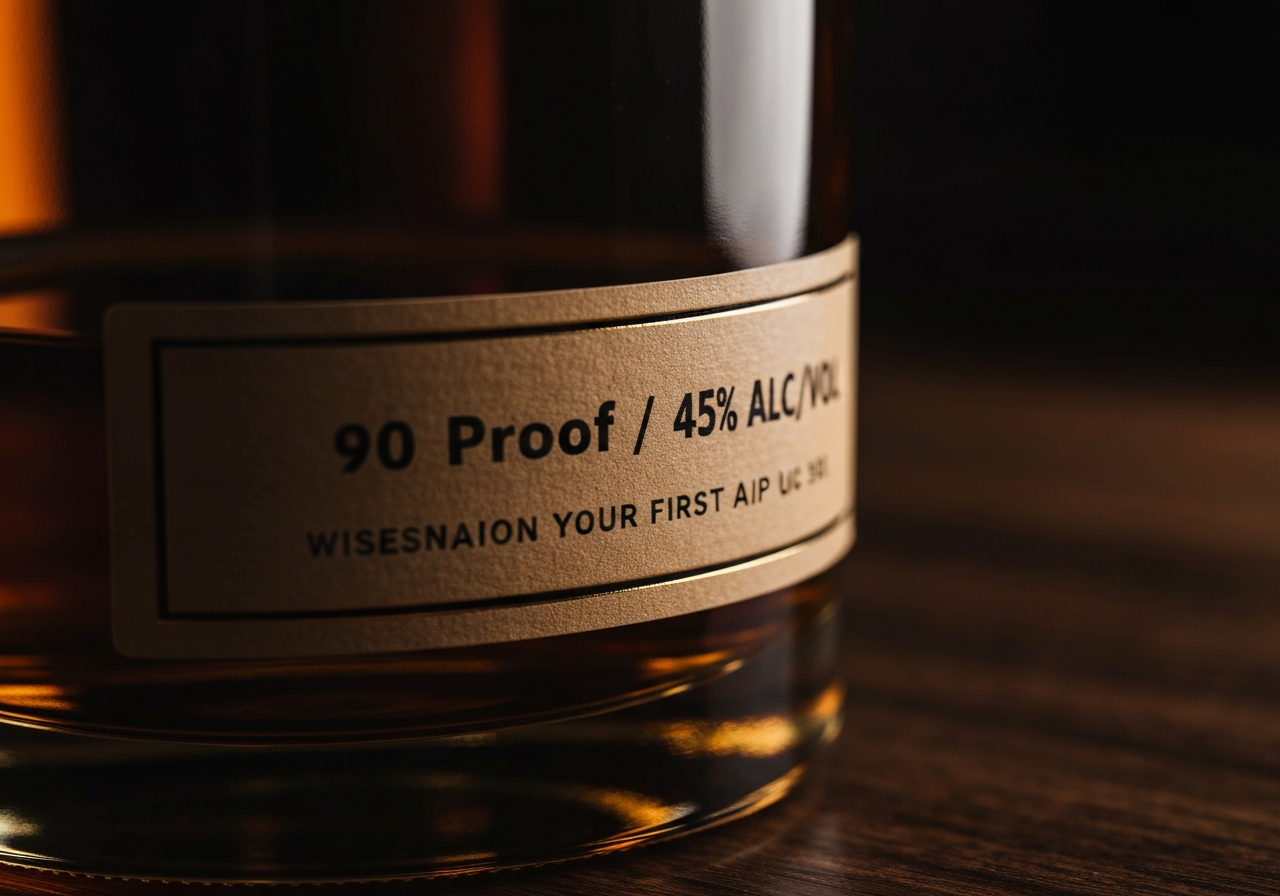
So, what is whiskey proof? At its most basic level, proof is a measurement of the ethanol (alcohol) content in a spirit. While much of the world has moved toward a standardized percentage, the United States still leans heavily on the traditional "proof" system. Fortunately, the math is incredibly simple. In the U.S., the proof is exactly double the Alcohol by Volume (ABV). If you see a bottle that says 40% ABV, it is 80 proof. If it’s 50% ABV, it’s 100 proof. It’s a 2:1 ratio that makes mental math a breeze while you’re browsing the shelves.
Why should you care about this number during your first foray into the world of drams? Because proof is the primary indicator of the "heat" or "burn" you’ll feel on the back of your throat. Alcohol is a volatile substance; the more of it there is in the liquid, the more aggressively it will react with your pain receptors. However, it’s also the vehicle that carries flavor. Understanding alcohol content in whiskey helps you manage your expectations. If you’re a beginner, an 80-proof bottle will likely be smooth and approachable, while a 120-proof bottle might feel like a tactical strike on your tongue if you aren't prepared for it.
It’s also worth noting that there are legal rules involved here. In the United States, for a spirit to legally call itself "whiskey," it must be bottled at no less than 80 proof (40% ABV). Anything lower is technically a "spirit specialty" or a liqueur. This floor exists to ensure that the whiskey maintains its structural integrity and characteristic punch. By learning to read these numbers, you’re not just looking at strength; you’re looking at the intensity of the experience. Let's dive deeper into where this strange word "proof" actually came from.
From Gunpowder to Glass: The Wild History of Proof
The term "proof" sounds more like something you’d find in a courtroom or a geometry textbook than a distillery, and its origins are surprisingly explosive. We have to travel back to 16th-century England to find the start of this story. Back then, there were no fancy laboratory tools to measure alcohol content. However, the British government and the Royal Navy needed a way to ensure they weren't being cheated by merchants who might water down the rum and gin rations provided to sailors.
The solution was the "gunpowder test." A purveyor would take a sample of the spirit, soak a grain of gunpowder in it, and attempt to light it on fire. If the spirit was too watery, the gunpowder would remain wet and refuse to ignite. But if the alcohol was strong enough, the gunpowder would flare up with a distinct "flash." If it ignited, the spirit was "proven" to be of a certain strength. This was the original "proof" of the spirit’s quality and potency. Specifically, this "proof" point occurred at approximately 57.1% ABV in modern terms.
"If the mixture didn't burn, it was considered 'under-proof' and likely watered down by unscrupulous merchants looking to turn a quick profit at the expense of a sailor's evening ration."
As you can imagine, the gunpowder test was hardly scientific. Factors like the humidity of the air or the coarseness of the powder could change the results. By 1816, the messy fire test was replaced by the Sikes Hydrometer. This was a mathematical tool that measured the liquid's density relative to water. It brought precision to the industry, but the "proof" terminology was already baked into the culture. While the British developed a complex system involving "degrees of proof," the United States decided to simplify things in the mid-19th century.
The U.S. government, primarily interested in tax collection, adopted the straightforward 2:1 ratio we use today. It was much easier for a tax collector to multiply a percentage by two than to deal with the British "57.1%" benchmark. Over time, what began as a survivalist safety check for sailors evolved into the standard marketing and regulatory language used by the world’s most famous distilleries. Whether you're drinking a heritage brand like Jack Daniel's or a prestige Scotch like Macallan, that "proof" number is a direct lineage to those sailors and their gunpowder.
ABV vs. Proof: Navigating Global Differences
If you enjoy traveling or shopping at duty-free stores, you’ve likely noticed that the labels start to look a little different once you cross borders. This brings us to the great whiskey proof vs abv divide. While the U.S. is the primary holdout for the "proof" system, the rest of the world—including the European Union and the home of whiskey itself, Scotland—uses ABV (Alcohol by Volume) as the legal and primary metric.
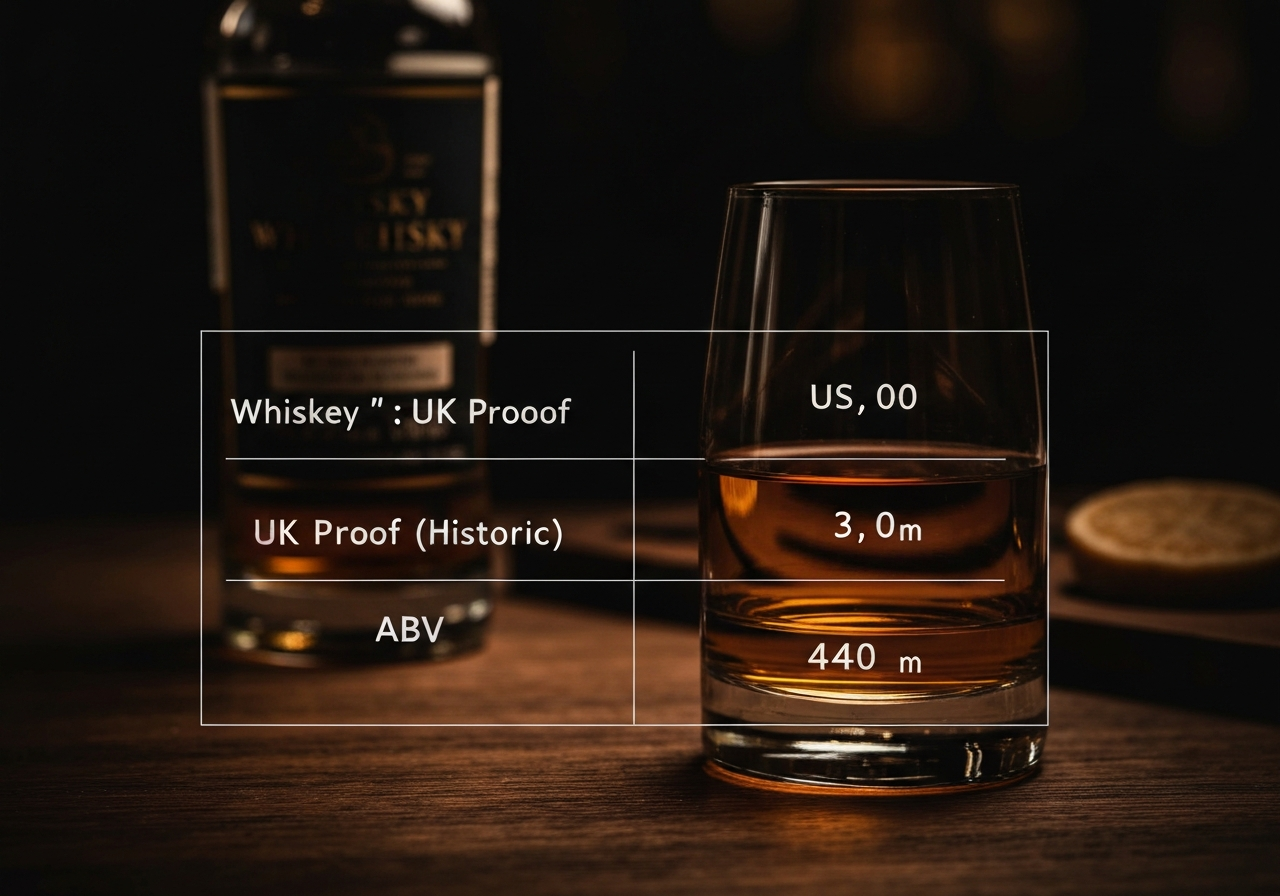
This creates what I like to call the "math trap." Remember how I said 100 proof in the U.S. is 50% ABV? Well, in the old British system (which you still see mentioned in vintage whiskey circles or certain "Navy Strength" bottlings), "100 proof" is actually about 57.1% ABV. This means that an old-school British "100 proof" bottle is significantly stronger than an American "100 proof" bottle. It’s a point of confusion that has tripped up many a collector. Fortunately, the UK officially abolished their specific proof system in 1980, standardizing to ABV to align with international trade, but the term still lingers in the vocabulary of enthusiasts.
To keep things clear for everyone, many international brands now include both numbers on their labels. You might see "43% ALC/VOL" in large print, with "(86 PROOF)" tucked neatly underneath it. This dual-labeling is a courtesy to the American market, which remains the largest consumer of whiskey in the world. As a consumer, you should always look for the "%" sign first, as that is the universal constant. If you see a bottle in a Parisian boutique labeled 45%, you immediately know it’s the equivalent of a 90-proof bourbon back home.
A practical tip for the world traveler: if you find yourself in a shop where only the ABV is listed, just double the number in your head. It’s the easiest way to translate the intensity of a foreign bottle into a language your palate understands. If you see a Scotch at 46% ABV, your brain should immediately register "92 proof"—a strength that indicates a bit more body and flavor than a standard 40% entry-level bottle.
The Science of Flavor: Why Alcohol Content Changes Everything
Why don't we just make all whiskey 40% and call it a day? It would certainly be easier on our throats. The answer lies in the chemistry of the spirit. Ethanol is more than just the stuff that gets you buzzed; it is a powerful solvent. When whiskey sits in a wooden barrel for years, the alcohol acts like a sponge, pulling out essential oils, esters, and congeners from the charred oak. These are the compounds responsible for the flavors we love: vanilla, caramel, baking spices, and dried fruit.
Because alcohol is a better solvent than water, a higher-proof whiskey can hold more of these flavor compounds in suspension. This is why high-proof whiskeys often have a superior "mouthfeel." They feel more viscous, oily, or "creamy" on the tongue. When a distillery "cuts" a whiskey with water to lower the proof, they are literally diluting those flavors. This creates a trade-off: lower proof is easier to drink but less complex, while higher proof is more intense but carries a heavier "burn."
There is also the matter of fatty acids. Many of the oils that provide a rich texture are soluble in alcohol but become cloudy when the alcohol content drops or the liquid gets cold. High-proof spirits (usually those above 46% ABV or 92 proof) often retain these oils. Lower-proof whiskeys frequently undergo "chill-filtration" to remove these oils so the whiskey doesn't look cloudy on a store shelf, but many enthusiasts argue this process "strips" the whiskey of its natural character.
Finally, let’s talk about the "nose." Alcohol is highly volatile, meaning it evaporates quickly. As it evaporates, it carries scent molecules upward toward your nose. A higher-proof whiskey is like a high-speed delivery system for aroma. This is why a cask-strength bourbon can smell like a bakery from across the room, while a lower-proof whiskey requires you to dive deep into the glass to catch a whiff. The alcohol isn't just there for strength; it’s there to make the flavor and aroma "pop."
Understanding the Proof Spectrum: From 80 to 'Hazmat'
Not all proofs are created equal. To help you shop, let’s break down the spectrum of alcohol content in whiskey and what you can expect from each category. Thinking of these as "experience levels" can help you choose the right bottle for your current palate.
- The Entry Level (80-90 Proof): These are the "daily drinkers." Most big-name brands bottle at this strength because it is approachable and budget-friendly. These whiskeys have been "cut" with water by the distillery to make them smooth and maximize the number of bottles they can produce. They are perfect for cocktails or for those just starting to drink whiskey neat.
- The Sweet Spot (90-100 Proof): Many enthusiasts believe this is where whiskey truly shines. At 45-50% ABV, you get a significant boost in flavor and mouthfeel without the alcohol becoming overwhelming. It’s the perfect balance of "punch" and "palatability."
- Bottled-in-Bond (Strictly 100 Proof): You’ll see this phrase on many American labels. Bottled in bond explained simply: it’s a quality guarantee from an 1897 law. To carry this name, the whiskey must be the product of one distillation season, by one distiller, at one distillery, aged in a federally bonded warehouse for at least four years, and bottled at exactly 100 proof. It is a benchmark of consistency.
- Cask Strength / Barrel Proof (110-135+ Proof): This is the "pure" stuff. Barrel proof meaning is simple: the whiskey is bottled exactly as it came out of the barrel, with no water added. These are intense, flavorful, and usually more expensive. They are the favorite of seasoned collectors who want to experience the whiskey in its rawest form.
- The 'Hazmat' Bottles (140+ Proof): This is a fun piece of whiskey trivia. Any spirit over 140 proof (70% ABV) is legally considered a hazardous material by the FAA and is prohibited from being carried on commercial airplanes. While rare, these "Hazmat" bottles are legendary in the bourbon community for their extreme intensity.
As a beginner, don't feel pressured to jump straight into the high-proof deep end. There is a lot of incredible whiskey to be found in the 90-100 proof range that will give you all the complexity you need without making your eyes water.
The Master Distiller’s Secret: Watering Down for Quality
It’s a common misconception that adding water to whiskey is just a way for distilleries to make more money. While it does increase volume, the use of water is actually a vital tool in a Master Distiller’s kit. The process of managing proof starts the moment the "white dog" (unaged spirit) goes into the barrel. In the U.S., bourbon cannot enter the barrel at higher than 125 proof. This "entry proof" is crucial because it dictates how the alcohol interacts with the wood over the years.
Once the whiskey is in the barrel, nature takes over. Through a process called the "Angel's Share," liquid evaporates through the porous wood. In the humid climate of Scotland, alcohol often evaporates faster than water, causing the proof to drop over time. However, in the dry, sweltering warehouses of Kentucky, water often evaporates faster than alcohol, meaning the proof of the bourbon actually increases as it ages. A barrel that went in at 125 proof might come out at 135 proof seven years later.
When it comes time to bottle, the distiller has to decide: should we leave it high, or bring it down? Adding water "opens up" the whiskey. It breaks certain chemical bonds and releases aromatic compounds that were previously "trapped" by the ethanol. Imagine it like a tightly furled rosebud; the water is the sunlight that encourages the petals to open. By bottling at 90 or 92 proof, the distiller is often presenting what they believe is the "ideal" version of that flavor profile for the average consumer.
Master tasters even have a trick called the "Kentucky Chew." They take a sip of high-proof whiskey and roll it around their mouth, allowing their own saliva to naturally dilute the spirit. This slow dilution on the tongue releases hidden notes of grain or fruit that you might miss if the alcohol was simply numbing your taste buds. So, the next time you see a "lower" proof, don't assume it’s inferior—it might just be the distiller showing you the whiskey’s best side.
How to Tackle High Proof: Tips for the Beginner Palate
So, you’ve bought a bottle of "Barrel Proof" bourbon and you’re a little intimidated. Don't worry; learning how to drink high proof whiskey is a skill that anyone can master. You don't have to drink it "neat" (without water or ice) to be a "real" whiskey drinker. In fact, many experts would tell you that you’re missing out if you don't experiment with dilution.
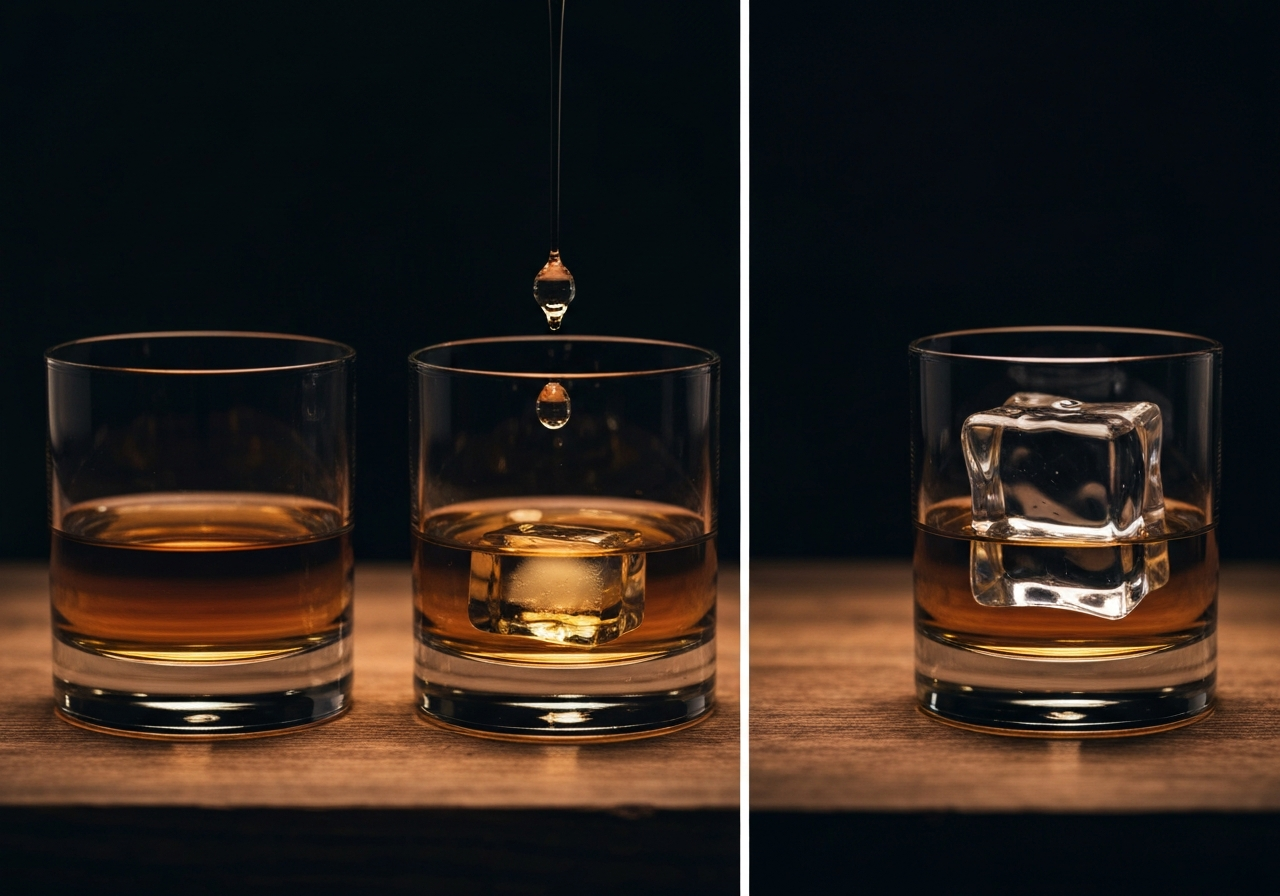
The best way to start is with the power of a single drop. Use a glass dropper or a small spoon to add just a few drops of room-temperature, filtered water to your glass. This breaks the surface tension of the liquid and creates a "bloom." You’ll actually see little oily swirls (called "marangoni effects") as the water and whiskey mix. Give it a swirl, wait a minute, and then nose it again. You’ll be amazed at how those few drops can transform a "burning" sensation into a "toffee and spice" sensation.
The glassware you use also matters. A Glencairn glass—the one with the tulip shape—is designed to concentrate aromas. While this is great for finding subtle notes, it also concentrates ethanol vapors. If you’re drinking a 120-proof whiskey, don't shove your nose deep into the glass and take a big sniff; you’ll singe your nostrils! Instead, keep your mouth slightly open while you smell. This allows the heavy alcohol vapors to pass through while your nose picks up the actual scents of the whiskey.
Finally, don't be afraid of ice. While "purists" might scoff, using a large, clear ice cube provides a slow, controlled dilution. As the ice melts, the proof of the drink gradually drops, allowing the whiskey to "evolve" in your glass. You might find that you hate the whiskey at 115 proof, but absolutely love it once the ice has brought it down to 100. It’s your whiskey; drink it in a way that makes your taste buds happy.
Shopping Guide: What Proof Should You Buy First?
When you're ready to head to the store, keep a few things in mind to get the best bang for your buck. For most beginners, I recommend starting in the 86 to 90 proof range. This is the "Goldilocks" zone—strong enough to have character, but gentle enough that you won't be overwhelmed by the heat. Bottles like Buffalo Trace (90 proof) or Elijah Craig Small Batch (94 proof) are classic starting points for a reason.
If you’re looking for a bit more value, consider buying 100-proof bottles, like Wild Turkey 101 or any "Bottled-in-Bond" expression. These are often more economical because the higher alcohol content means the flavor is more concentrated. You can always add a splash of water at home to "create" your own 80-proof experience, effectively making the bottle last longer. It’s like buying concentrated orange juice instead of the pre-mixed carton.
Also, keep an eye out for the "Non-Chill Filtered" label. This is usually found on whiskeys that are 46% ABV (92 proof) or higher. As we discussed earlier, these whiskeys haven't been stripped of their fatty oils. Even if the proof is a bit higher than you're used to, the texture will often be so much richer and more satisfying that you won't mind the extra "zip" of the alcohol.
Here’s a quick "Starter Kit" for different proof levels:
- For Smoothness: Basil Hayden (80 proof) - Extremely light and approachable.
- For a Step Up: Maker’s Mark (90 proof) - A classic wheated bourbon with a gentle spice.
- For the Bold Beginner: Old Forester 100 Proof - A punchy, rich bourbon that stands up well to ice.
- For the Brave: Rare Breed by Wild Turkey (~116 proof) - A widely available barrel-proof whiskey that shows you what "raw" power tastes like.
Conclusion: Finding Your Personal 'Proof Point'
At the end of the day, understanding whiskey proof is about empowerment. It’s about looking at a bottle and knowing exactly what kind of "conversation" you’re about to have with it. Is it going to be a gentle whisper (80 proof) or a spirited debate (120 proof)? Neither is inherently better than the other; they just serve different moods and occasions.
The most important takeaway is the "No Wrong Way" philosophy. The world of whiskey can sometimes feel full of rules, but the only rule that truly matters is that the best whiskey is the one you enjoy drinking, exactly how you like to drink it. If you love a 130-proof "Hazmat" bottle neat, fantastic. If you prefer an 80-proof blend over a mountain of ice, that is equally valid. Proof is just a tool to help you find your "sweet spot."
As you continue your journey, you might find your palate naturally shifting. Many beginners start with lower proofs and, as their taste buds become acclimated to the heat, find themselves craving the intensity and oiliness of higher-proof spirits. It’s a natural evolution. Go take a look at the bottles in your cabinet right now. Do you see a pattern? Are your favorites all hovering around the same number?
We’d love to hear from you! What was the first "high proof" whiskey that really blew your mind, or do you prefer the classic 80-90 proof daily drinkers? Share your favorite "sweet spot" proof in the comments below, and let’s keep the conversation—and the whiskey—flowing. Cheers!